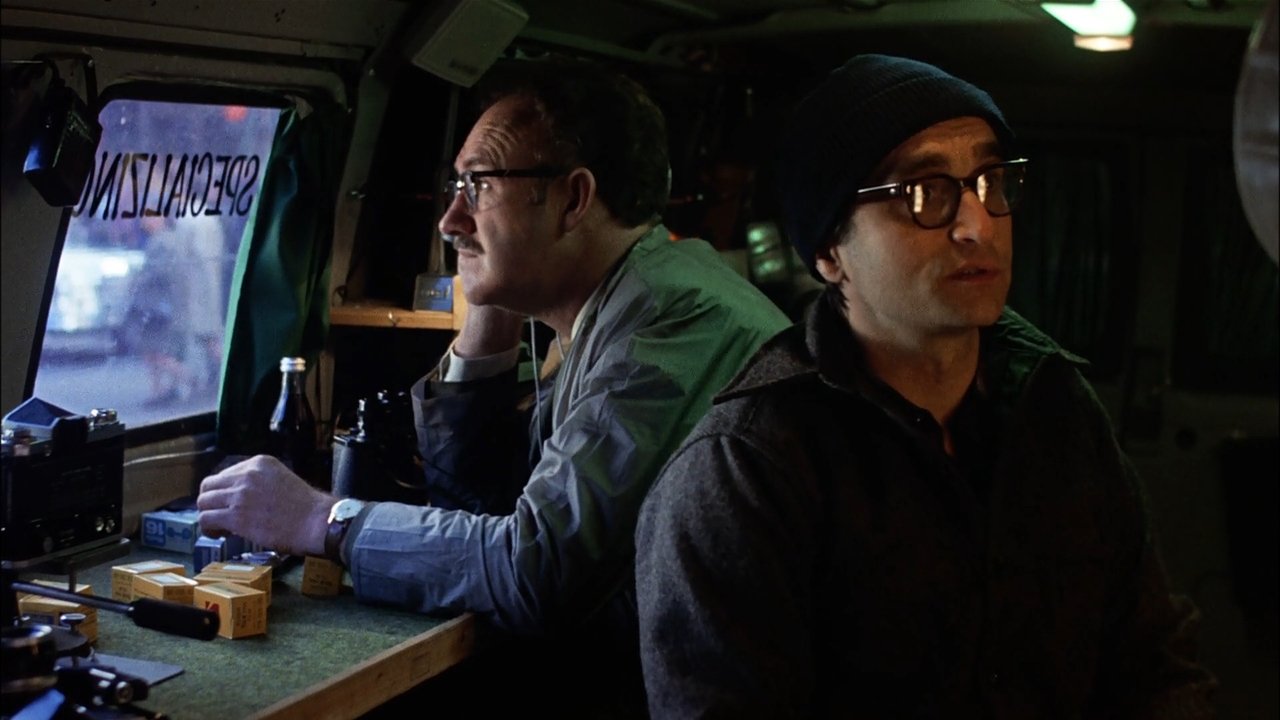
Harry Caul is the best in the country at recording conversations no one is supposed to hear, and the job has hollowed him out.
He lives behind three locks and a burglar alarm and treats his own privacy as a fortress while making a living stripping other people's away. When a routine surveillance job on a young couple in San Francisco's Union Square yields a fragment of dialogue that sounds like a threat, Harry can't leave it alone, even though the meaning of a taped sentence changes with every replay.
Coppola wrote and directed The Conversation between the two Godfather films, financing it himself as a smaller, personal project built around an idea he'd been developing since the mid-1960s: fusing the visual puzzle of Antonioni's Blow-Up with the world of professional audio surveillance. The script existed years before the Watergate break-in, so the film's wiretapping plot wasn't written as commentary on it, but its 1974 release landed in the middle of the scandal's unraveling.
The film's most distinctive achievement is its sound design, built by supervising editor Walter Murch, who treats audio the way a detective treats a photograph: pulling a single scrap of tape through repeated passes of cleaning and filtering until fragments of meaning surface and then destabilize again. Gene Hackman plays Harry with a closed-off, almost mousy restraint, a deliberate departure from the volatile energy of his Popeye Doyle in The French Connection two years earlier.
The Conversation won the Palme d'Or at the 1974 Cannes Film Festival, and was nominated for three Academy Awards including Best Picture, losing that category to Coppola's own The Godfather Part II. It streams on Paramount+ and is available to rent or buy on major digital platforms; check theplot.tv for current availability in your region before you sit down.