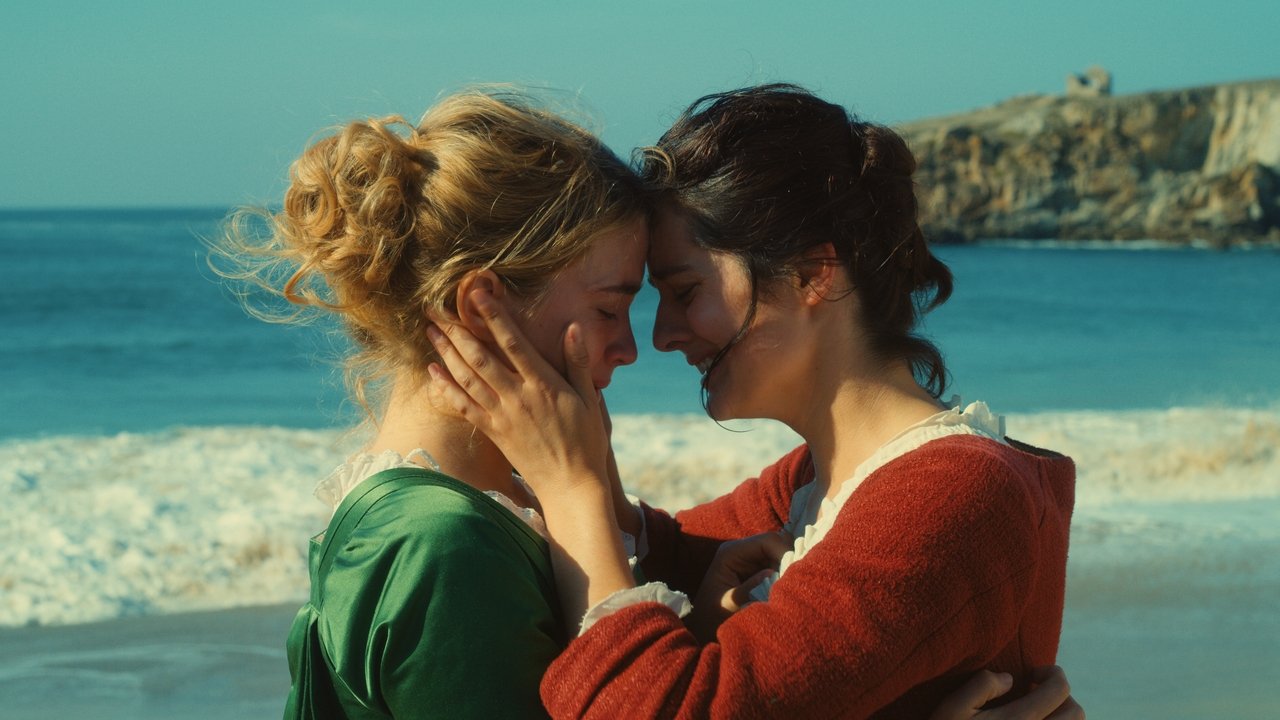
Céline Sciamma's fourth feature sets up a deceptively simple assignment: a painter is sent to a remote island in late-18th-century Brittany to secretly complete a wedding portrait of a young noblewoman who has already refused to sit for one artist before her.
The premise strips away almost every distraction a period drama usually leans on, no crowded ballrooms, no scheming courtiers, just two women, a house, and the slow, wary work of actually seeing each other. That scarcity is the mood: a story about looking and being looked at, told with the patience of someone who trusts a held glance more than a line of dialogue.
The most useful thing to know going in is what you will not hear: Sciamma wrote the film with no score at all, restricting music to whatever the characters themselves could plausibly hear, a harpsichord piece Marianne plays from memory, or a group of women singing around a bonfire. She has described the decision as genuinely difficult, since building a love story without the shorthand of a swelling score forces every emotional beat to come from performance and framing instead. It also reframes the muse relationship at the story's center: Sciamma does not believe in the muse as traditionally understood, insisting the model and the artist are co-creators rather than a passive subject and an active genius, an idea that runs through her long collaboration with Adèle Haenel, whose performance here was built alongside Sciamma rather than assembled from an existing screen persona.
The film premiered in competition at Cannes in 2019, where it won Best Screenplay and became the first female-directed film to take the Queer Palm, and it deliberately dismantles the history of painting as a male-gaze exercise. Sciamma has talked about wanting to show the mechanics of art-making itself, the layers, the concentration, the failed attempts, rather than presenting a finished image as if it arrived by inspiration alone, and the film's visual language keeps framing a woman looking rather than being looked at, built into the blocking and editing rather than announced by the script.
Seven years on, it has become a fixture on best-of-the-decade lists and is widely treated as one of the defining works of 21st-century queer cinema, cited less for novelty than for how rigorously it follows through on its own premise. There is no trailer-ready twist to spoil and no shock ending to protect, which makes it an unusually safe recommendation for a slow, attentive evening rather than background viewing. Check your usual streaming services for current regional availability before settling in.