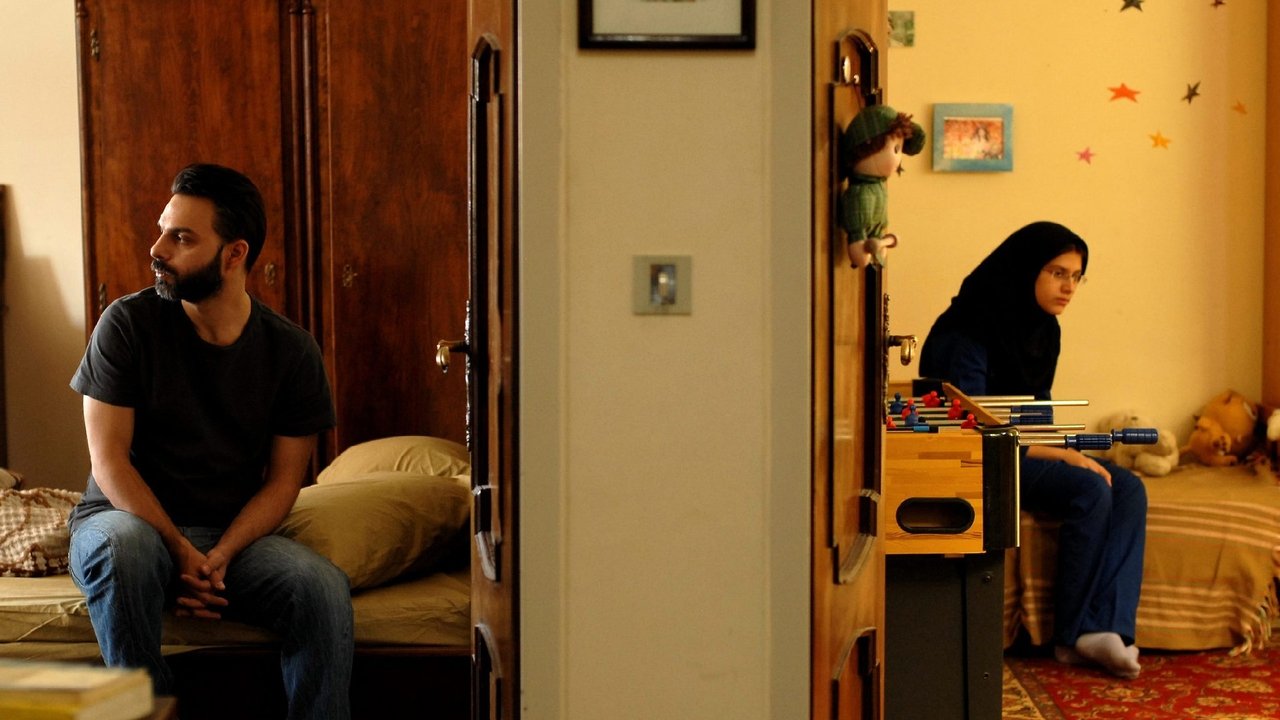
A married couple in Tehran reach an impasse: Simin wants to leave Iran for their daughter's future, Nader won't abandon his father, who has Alzheimer's.
Simin moves out. Nader hires a caregiver, Razieh, to look after his father while he works, and within days a dispute between them spirals into a legal case that pulls in both families, a judge, and a room full of contradictory accounts. Asghar Farhadi sets up a marriage and a hired-help arrangement that both quietly depend on trust neither side can fully extend, and the tension comes from watching that trust fail in small, plausible increments.
Farhadi wrote and directed the film without a traditional villain in mind, structuring the script so each new scene shifts who seems right. He shot much of it with handheld cameras and tight, overlapping dialogue to keep the audience inside the argument rather than above it, a formal choice that mirrors the courtroom's own inability to settle on a single truth. The four leads, Leila Hatami, Peymon Moaadi, Sareh Bayat and Shahab Hosseini, were largely unaware of where the plot would end when scenes were shot, which sharpens the sense that nobody involved gets the full picture at once.
What makes the film so unsettling is how it refuses to let anyone off the hook: nearly everyone seems equally right and wrong at once, trapped in a web of pride, religion, money and honor. New details keep surfacing that quietly reframe blame, and the ensemble's naturalistic performances give every position, secular and religious, working-class and professional, equal weight. The film became the first Iranian production to win the Academy Award for Best Foreign Language Film, after also taking the Golden Bear at Berlin.
At 123 minutes, A Separation rewards close attention rather than background viewing, since its tension builds through accumulating detail rather than incident. Check A Separation's page on PLOT for current streaming and rental availability in your region before pressing play tonight.