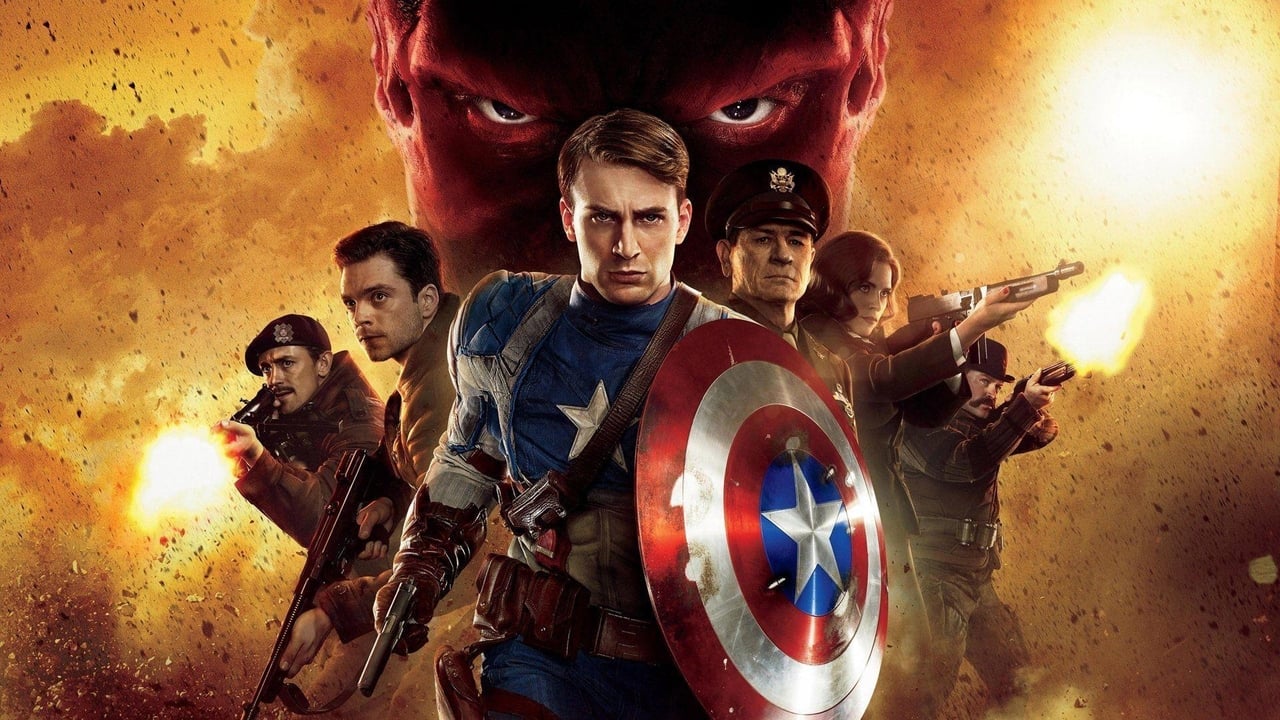
Captain America: The First Avenger opened in the United States on July 22, 2011, closing out the run of standalone origin stories Marvel Studios had built since Iron Man three years earlier.
It arrived as the last piece before the studio's first team-up picture, The Avengers, due the following summer, and its job was unusually specific: introduce a super-soldier out of time and do it as a period piece rather than a contemporary blockbuster. Fifteen years on, that origin-first structure is why it still works as a self-contained watch rather than only a franchise stepping stone.
Director Joe Johnston brought a specific pedigree to the project: he had directed The Rocketeer in 1991, a retro-futurist adventure steeped in 1930s pulp serials, and he leaned on that same sensibility here rather than chasing a modern superhero template. Johnston has said his touchstone for the film was Raiders of the Lost Ark, aiming for the breezy fun of 1940s adventure cinema instead of grim spectacle. Casting mattered just as much: Chris Evans turned the role down multiple times before accepting, wary of the scrutiny that came with a multi-picture Marvel contract, and his eventual, reluctant yes shaped a performance built on earnestness rather than swagger.
What holds up best is how deliberately the film treats Steve Rogers's transformation as a character study before it becomes an action showcase. The first act, built around a small, unconvincing body inside an outsized will, does more work establishing who this hero is than the serum sequence that follows it. Critics at the time noted the film's stronger first half and a slightly less distinctive back stretch once the war-movie momentum takes over, with Red Skull drawing complaints for being underdeveloped as a villain, evidence the filmmakers cared more about Rogers's interior life than a generic supervillain confrontation.
The film's reputation has grown more favorable with distance, largely because its origin-story patience reads better once viewers know how much weight the character would carry across the next decade of MCU films. It was, by design, the most overt piece of table-setting in Marvel's Phase One. For a first watch now, the reason to choose it is simpler than franchise homework: it is a well-drawn wartime adventure with a clear, unfashionable earnestness at its center, closer in spirit to the pulp serials Johnston grew up on than to the films that followed it.