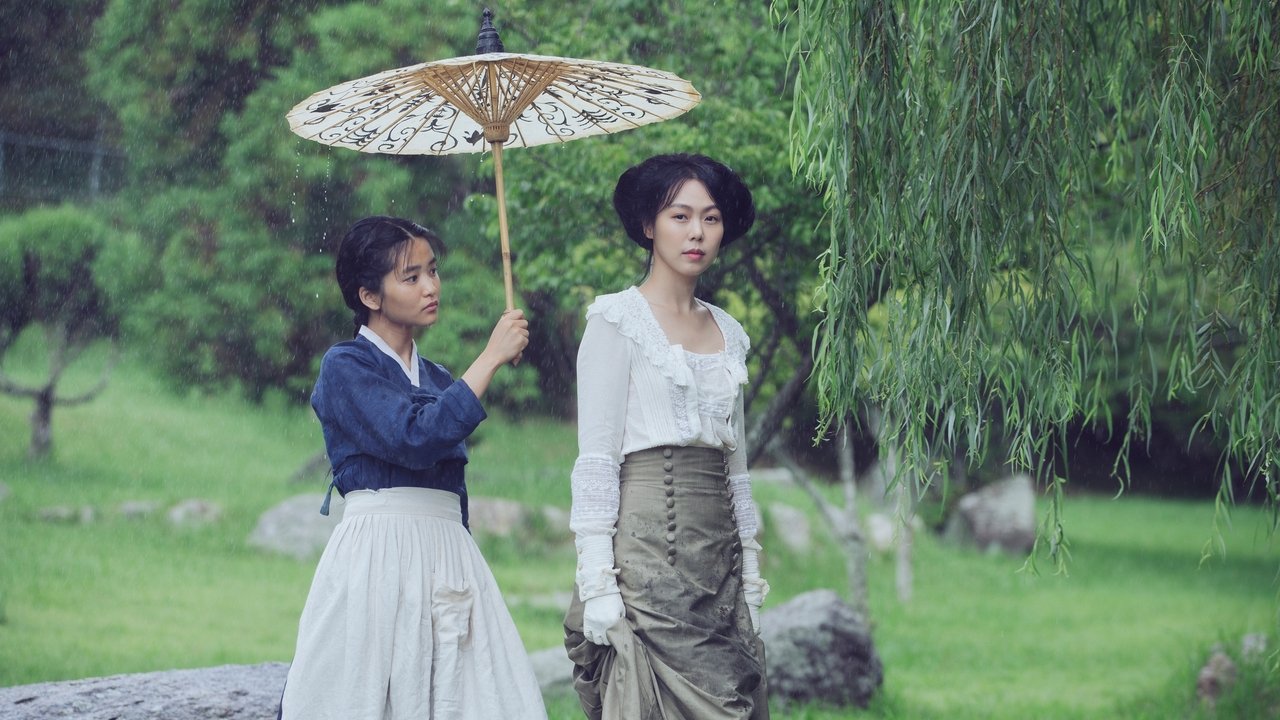
Park Chan-wook's "The Handmaiden" sets up a con from two directions at once. Sook-hee, a pickpocket's daughter, is planted as a handmaiden to Lady Hideko, a wealthy Japanese-Korean heiress, so a swindler posing as a count can marry and then institutionalize her for her fortune.
The household itself is the trap: a mansion built half in Western style and half in Japanese style, isolating Hideko under her uncle's obsessive control of rare erotica and calligraphy.
The distinct creative choice behind the film is the relocation itself. Park adapted Sarah Waters's 2002 novel "Fingersmith," moving its Victorian-era con from London to Korea under Japanese colonial rule in the 1930s. That shift turns Waters's class conflict into something with an added layer of national and ethnic tension, and Park restructures the novel's design into three distinct parts rather than following its two narrators straight through.
What makes the film work as more than an elaborate puzzle box is how deliberately its craft mirrors its subject. Cinematographer Chung Chung-hoon, a longtime Park collaborator, shoots the mansion's corridors with controlled, gliding camera movement that plays like a silent participant in the deception. Production designer Ryu Seong-hee's split-style house gives the lighting and color scheme somewhere concrete to dramatize the story's divided loyalties. The film premiered in competition at the 2016 Cannes Film Festival.
"The Handmaiden" runs 145 minutes and is in Korean and Japanese with subtitles. Check PLOT's listing for The Handmaiden to confirm which service currently carries it in your region before pressing play, since availability shifts between licensing windows.