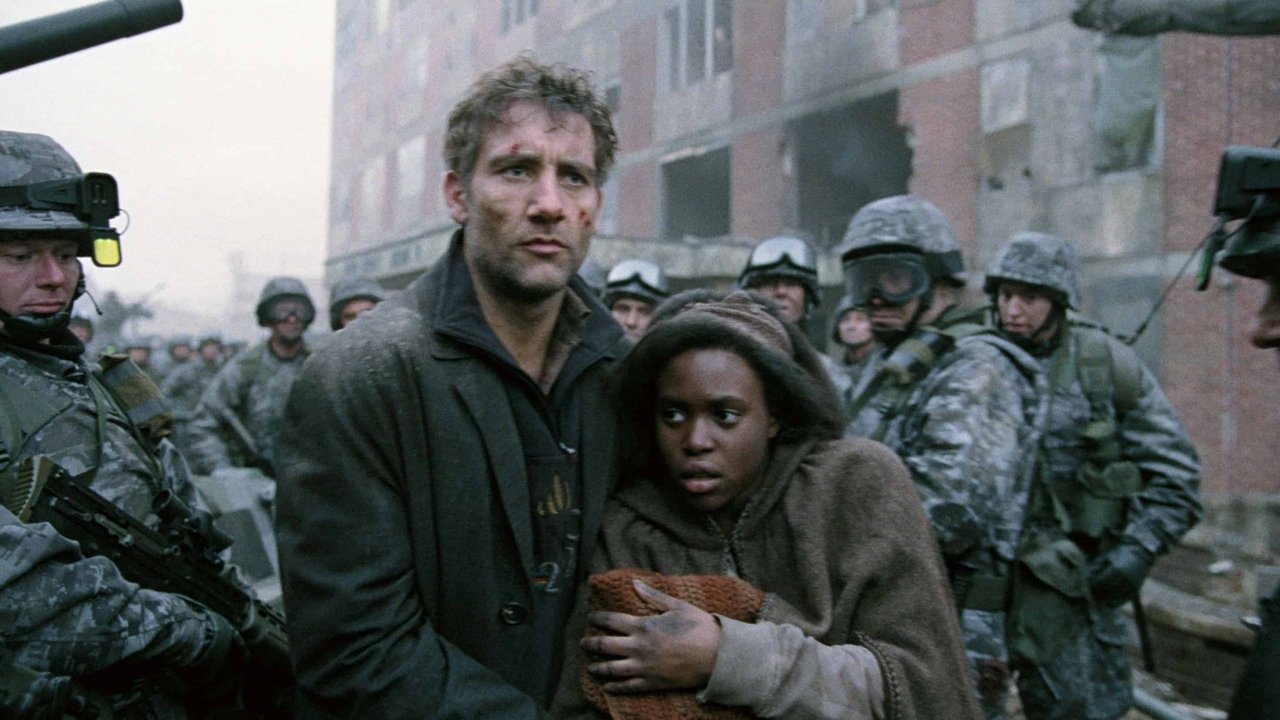
London, 2027. Humanity has been infertile for eighteen years, the youngest person alive has just been killed, and Britain has hardened into a surveillance state that cages and deports refugees while the rest of civilization quietly collapses.
Alfonso Cuaron drops Theo Faron, a burned-out bureaucrat played by Clive Owen, into this world and asks him to smuggle a miraculously pregnant woman to safety. The specific dread here isn't an alien invasion, it's a species that has simply stopped renewing itself.
Cuaron adapted P.D. James's 1992 novel, but the film departs from her book meaningfully: where James wrote a story rooted in explicit spiritual barrenness, Cuaron subordinates that theology into suggestion, shifting the emphasis toward political and social collapse. He also called the project his "anti-Blade Runner," rejecting glossy future-tech for hand-held documentary newsreel style, a choice that shaped every department on the film.
The film's reputation rests on a specific craft decision: several major sequences play out in unbroken single takes. Cinematographer Emmanuel Lubezki and his team built custom rigs, including a car with a duplexed roof so the camera could operate from above the actors while they performed inside a moving vehicle. The effect removes the safety of a cutaway, so violence lands with immersive realism, forcing Owen's weary, unglamorous performance to carry scenes that would normally rely on editing for tension.
Children of Men earned a modest $70.6 million against a $76 million budget on release in 2006 and only reached three Academy Award nominations, but its critical standing has grown steadily since, and Lubezki's extended-take approach here directly informed his later work on Gravity and The Revenant. Check PLOT's listing for this title to confirm current streaming or rental availability before pressing play tonight.