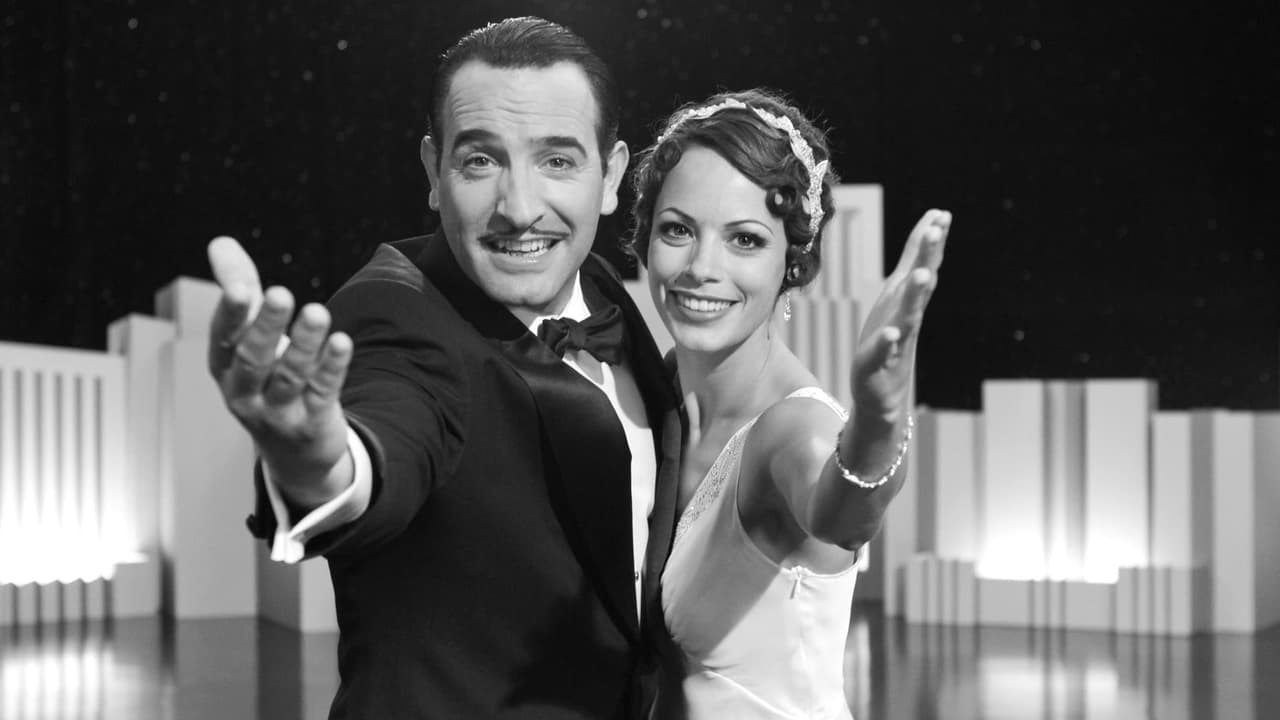
Fifteen years after it first charmed audiences, The Artist remains one of the strangest successes in modern Hollywood: a black and white movie about the end of silent film, made in 2011 as if sound had never been invented. Michel Hazanavicius wrote and directed it as a loving dare, built around Jean Dujardin's George Valentin, a silent-era matinee idol who refuses to believe talking pictures could end his career, and Bérénice Bejo's Peppy Miller, a chorus girl on her way up just as he is on his way down.
What makes it work is how literal the filmmakers were willing to get. Much of it was shot around Los Angeles rather than recreated on a European backlot, letting real Hollywood architecture stand in for its own history, and George is given a scene partner who never needed a script: Uggie, a Jack Russell terrier whose timing ends up stealing scenes from actors who actually have lines. The film went on to become the first largely silent picture to win the Academy Award for Best Picture since the inaugural ceremony, and it still holds a 95 percent on Rotten Tomatoes, proof the gamble paid off with critics and not just award voters.
The boldest choice in The Artist is musical rather than visual. For one key sequence, composer Ludovic Bource folds in Bernard Herrmann's love theme from Vertigo, a piece of music so recognizable that Kim Novak publicly objected, arguing the reuse amounted to the production borrowing her own legacy without enough credit. Hazanavicius never hid the source, and the Academy ultimately ruled the score eligible for awards consideration since the vast majority of it was original, but the dispute turned a tribute to old Hollywood into a real argument about where homage ends and borrowing begins.
What stays with you, though, is not the gimmick of the silence. The Artist is a film about ego, obsolescence and reinvention that trusts its audience to read a face instead of waiting for a line, and that trust is exactly why it still rewards a rewatch fifteen years later.