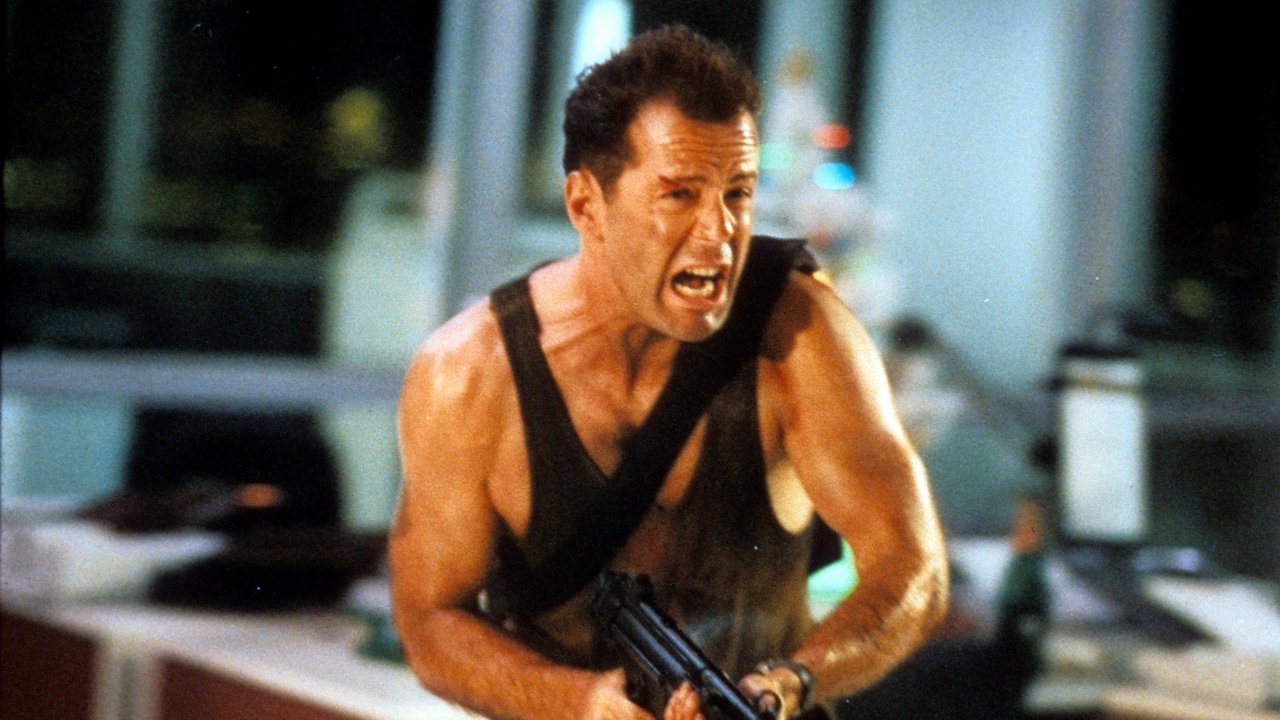
Die Hard opened in Los Angeles on July 12, 1988, ahead of its wide US release on July 20, and thirty-eight years on it remains the film against which every subsequent siege thriller is measured.
John McClane's one-night stand against Hans Gruber's crew at the fictional Nakatomi Plaza, shot largely inside Los Angeles's real Fox Plaza, turned a modest summer release into the template for a genre.
The film adapts Roderick Thorp's 1979 novel Nothing Lasts Forever, itself a sequel to his 1966 book The Detective, which had already been filmed in 1968 with Frank Sinatra in the lead. That contractual lineage meant Sinatra, by then in his seventies, had to be formally offered the part before anyone else. He declined, the script did the rounds of the era's biggest action stars, and every one of them passed. Bruce Willis, known at the time chiefly for the television series Moonlighting, was a late and unlikely choice for a role built around vulnerability rather than muscle.
John McTiernan, fresh off Predator, built the film's tension by keeping McClane's geography legible: the audience always knows which floor he is on, how far he is from help, and what he has lost since the last exchange with the men upstairs. Willis plays McClane barefoot, bleeding and audibly frightened, a deliberate departure from the era's stoic, invulnerable action leads. Opposite him, Alan Rickman, making his film debut after a career on the London and New York stage, plays Gruber with a controlled, almost bored precision that keeps the villain's menace intellectual rather than merely physical.
The film grossed around $140 million worldwide, a strong result for a summer release with a television actor in the lead. Its real legacy is structural: the confined, single-location siege format it popularized gave rise to an entire run of imitators pitched as Die Hard on a bus or Die Hard on a mountain, from Speed to Cliffhanger to Under Siege.